What the Next Generation of Security Leaders Needs to Know

For years, security leaders have talked about earning a seat at the table.
That is still important, but today, simply being in the room is no longer the goal. The real opportunity is to become a meaningful part of how the organization makes decisions, bringing a security perspective that helps leaders understand risk, evaluate choices and move the business forward with confidence.
The 2026 Annual Chief Security Officer (CSO) Survey from The Clarity Factory points clearly in this direction. Corporate security is evolving from a traditional protection function into a broader enterprise capability. It creates value through insight, coordination, technology-enabled decision support and effective crisis management.
For tomorrow’s security leaders, that evolution requires more than technical expertise. It means understanding the business, communicating in ways executives care about and building the leadership skills needed to work across the enterprise.
The question is no longer whether security belongs in the room.
One of the strongest themes in this year’s research is integration. Two-thirds of CSOs expect their teams to contribute more to enterprise risk management over the next five years. Collaboration with functions such as HR, technology and cybersecurity is also increasing. The report describes the direction for corporate security as less about “staying in your lane” and more about specializing and connecting.
However, there is a difference between being connected to the business and being truly integrated into how it operates. The survey found that formal participation is critical. In organizations with established structures for geopolitical risk, security teams are twice as likely to participate in scenario planning, red teaming and exercises. When CSOs are members of formal task forces focused on social and political risks, they are three times more likely to brief the board or executive committee.
That creates opportunity, but it also raises the bar. CSA CEO Jeremy Baumann comments, “Getting invited into the room is only the beginning. Security leaders have to understand why they’re there, what the business is trying to accomplish and how security can help leadership make a better decision.”
That means translating security activity into business impact.
A security leader may understand exactly why a new program, resource or investment is important. But the CEO, CFO or board is weighing that recommendation against many other priorities. The conversation has to start somewhere different. Instead of asking, “What does the security organization need?” start with, “What does the business need?”
What outcome are we trying to protect? What decision does leadership need to make? What could prevent the organization from reaching its goals? What would the operational, financial, reputational or people impact be? Those are business questions, and increasingly, they are security questions, too.
Learn to speak the language of the business
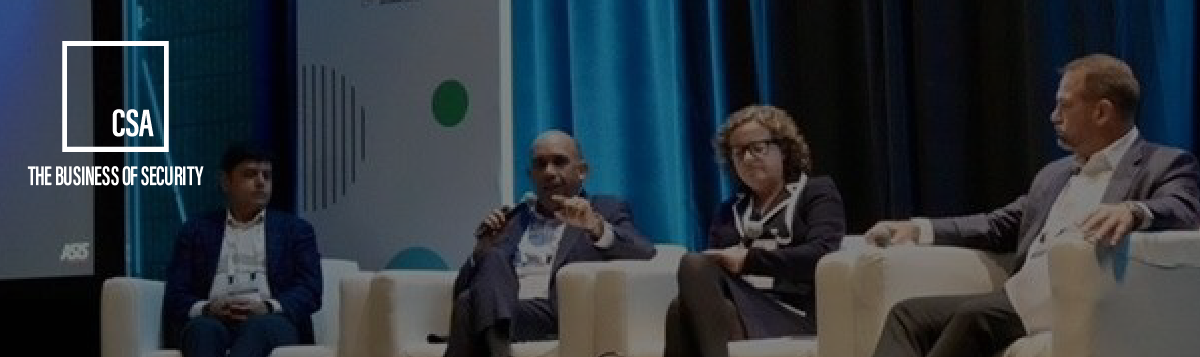
During a GSX panel on the next generation of security leadership, Baumann emphasized the importance of understanding what belongs at the C-suite and board level. Security leaders need to communicate the business impact of corporate security and understand what senior leadership truly cares about. That does not mean oversimplifying risk, it means putting security information into context.
There is a difference between reporting how many incidents a team handled and explaining what those incidents tell leadership about operational resilience, employee safety, business continuity or exposure in a strategic market. Both may be accurate, but only one helps an executive make a decision.
The survey identifies a similar challenge with measurement. Few CSOs use KPIs tied to executive-level concerns, and the report notes that metrics and KPIs are often confused. Its recommendation is to elevate security reporting so it is appropriate for enterprise governance forums. That requires a different mindset.
Success is not simply how much security activity occurred. It is what changed for the business because of it. Did intelligence influence a decision? Did an assessment help the organization enter a market with greater confidence? Did scenario planning identify a vulnerability early enough to act? Did collaboration across functions lead to a better response? Those are stronger measures of the value security brings to the organization.
Leadership requires more than expertise
Technical credibility remains essential. Security leaders need the knowledge and judgment to understand threats, assess risk and lead an effective function.
The survey makes clear that technical expertise is only part of what today’s security leaders need. CSOs continue to place significant value on the skills that help security professionals work across the business. Communication, collaboration, teamwork and influencing are central to business partnership. Strategic thinking, judgment and decision-making are also increasingly important as security teams help organizations navigate uncertainty and competing priorities.
That reflects a broader shift in the role. Security leaders are not only expected to identify and manage risk. They also need to translate that expertise into business outcomes, build relationships across functions and help leadership make informed decisions.
Baumann comments: “You can be the smartest security person in the room and still struggle as a CSO. At that level, success depends on your ability to understand people, build trust and connect your expertise to what the organization is trying to accomplish.”
Those capabilities become even more important as someone moves into senior leadership. Earlier in a career, credibility may come from being the person with the answer. At the executive level, value often comes from understanding the broader context, asking the right questions and helping the organization weigh competing priorities. The survey reinforces that point. It highlights strategic thinking, judgment and decision-making as key leadership competencies, alongside the ability to adapt as risks, technology and business priorities continue to change.
Prepare for the role before you have it
For professionals who want to become CSOs, leadership development cannot start after the promotion. At GSX, Baumann highlighted several ways to prepare: build a security strategy that can earn executive and board support, understand how to operate effectively at the C-suite level and find mentors who can help you navigate that environment.
How can aspiring leaders can start building that experience now? Learn how the company makes money and where it wants to grow. Build relationships outside security. Spend time with finance, operations, HR, legal, technology and communications. Pay attention to how senior leaders present information and make decisions. Find mentors, including people outside the security profession, who understand executive leadership. When opportunities arise, take on work that exposes you to the broader business.
The goal is not to become less of a security professional. It is to become a security professional who understands the enterprise.
From security leader to business leader
The 2026 CSO Survey shows a profession in transition. Security risks are increasingly interconnected. Corporate security teams are working more broadly across the enterprise. Intelligence and technology are creating new opportunities. And organizations increasingly expect security leaders to contribute to enterprise risk and resilience.
That creates an important opportunity for the profession. The next generation of CSOs will still need deep security expertise. They will also need the communication skills to make complex issues understandable, the judgment to navigate competing priorities and the ability to build strong relationships across the business.
The seat at the table is important, but what security leaders bring to the conversation carries even more weight.
Speak to a Security Expert
Enter your information below to speak to a security expert on our team.